

Key Takeaways
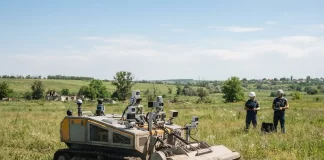
- Kosovo has successfully concluded a 27-year humanitarian mission to clear the country of landmines.
- A non-invasive test for womb cancer developed in England has shown over 80 percent accuracy in detecting the disease.
- Scientists in Bolivia have discovered the first new cat species in over 100 years in the Yungas cloud forest.
Global milestones in health, conservation, and recovery
Some 27 years after the end of the Kosovo War, a major humanitarian mission to clear landmines has concluded. The Halo Trust announced the completion of the project, which has allowed agriculture and infrastructure to thrive. Today, the average life expectancy in Kosovo has reached 78 years. Atholl Stewart, a programme manager for the charity, highlighted the lasting benefits. “Kosovo shows us that the real impact of removing landmines and cluster bombs is not measured in hectares cleared, but in what that land makes possible over time.”
Medical advancements and public health victories
In England, doctors at the University of Manchester have developed a simple, non-invasive test for womb cancer using urine and vaginal fluid. Trials involving 1,864 women showed it could identify more than 80 percent of cancers and was 98.8 percent accurate in ruling the disease out. Prof Emma Davidson explained the impact. “Our study shows that a simple test using urine and vaginal samples could help identify the women most likely to have cancer while safely reassuring many others much earlier in the diagnostic pathway.” Meanwhile, the World Health Organization confirmed that Thailand has successfully eliminated rubella as a public health problem, joining over 130 other nations in reaching this major milestone.
Conservation efforts and a surprising discovery
Momentum for environmental protection continues to grow, with 100 nations now having ratified the High Seas Treaty. Brian O’Donnell, director of Campaign for Nature, noted the positive trends in global conservation. “Real progress is being made.” In Bolivia, researchers made a stunning discovery in the Yungas cloud forest. A feline initially thought to be a stray northern tiger cat was confirmed through DNA testing to be an entirely new species, the only known living member of the Tilcayo cat family. Scientist Paola Nogales-Ascarrunz emphasized the importance of the find. “Describing a new cat species after more than 100 years shows how much we still have to learn about the biodiversity around us.”