

Key Takeaways
-
A Kentucky homeowner discovered an Eastern box turtle covered in bright blue paint in her new yard and transported it to a specialized wildlife center.
-
Rehabilitation experts are painstakingly cleaning the turtle's living shell over several days using warm water, dish soap, and a toothbrush to avoid causing damage.
-
Once all the artificial paint is removed, the turtle will be safely returned to her original habitat to accommodate her strong homing instincts.
A Colorful Discovery in Kentucky
When Campbellsville resident Venitia moved into her new home, she noticed an unusual resident wandering the property. An Eastern box turtle, completely coated in a thick layer of bright blue paint, was living in her yard. Neighbors explained the previous homeowner had deliberately painted the animal, along with other turtles in the area. Recognizing the reptile needed assistance, Venitia drove the turtle two hours to the Wilderness Trail Wildlife Center in London, Kentucky.
Upon assessing the newly named turtle, Pickett, experts determined the situation required a highly delicate approach. The center quickly realized the severity of the issue, explaining online, “The blue paint is not simply sitting loosely on her shell. It is extremely hard and firmly bonded to the scutes, so removing it isn’t as simple as peeling or scrubbing it off,” before adding, “Trying to scrape, sand, or aggressively remove it could damage the shell underneath. Because we don’t know what type of paint was used, we’re also not going to experiment with harsh paint removers or solvents.”
The Slow Path to Recovery
The rehabilitation team soon uncovered a second layer of red paint beneath the blue, suspecting the coating had been on Pickett for approximately two years. Licensed wildlife rehab specialist Tonya Poindexter highlighted the physical impact on the creature, noting that a shell is a living skeletal structure that grows and mends itself. “Putting paints and chemicals that were never intended for an animal onto that shell is simply not something we should be doing to wildlife,” she explained.
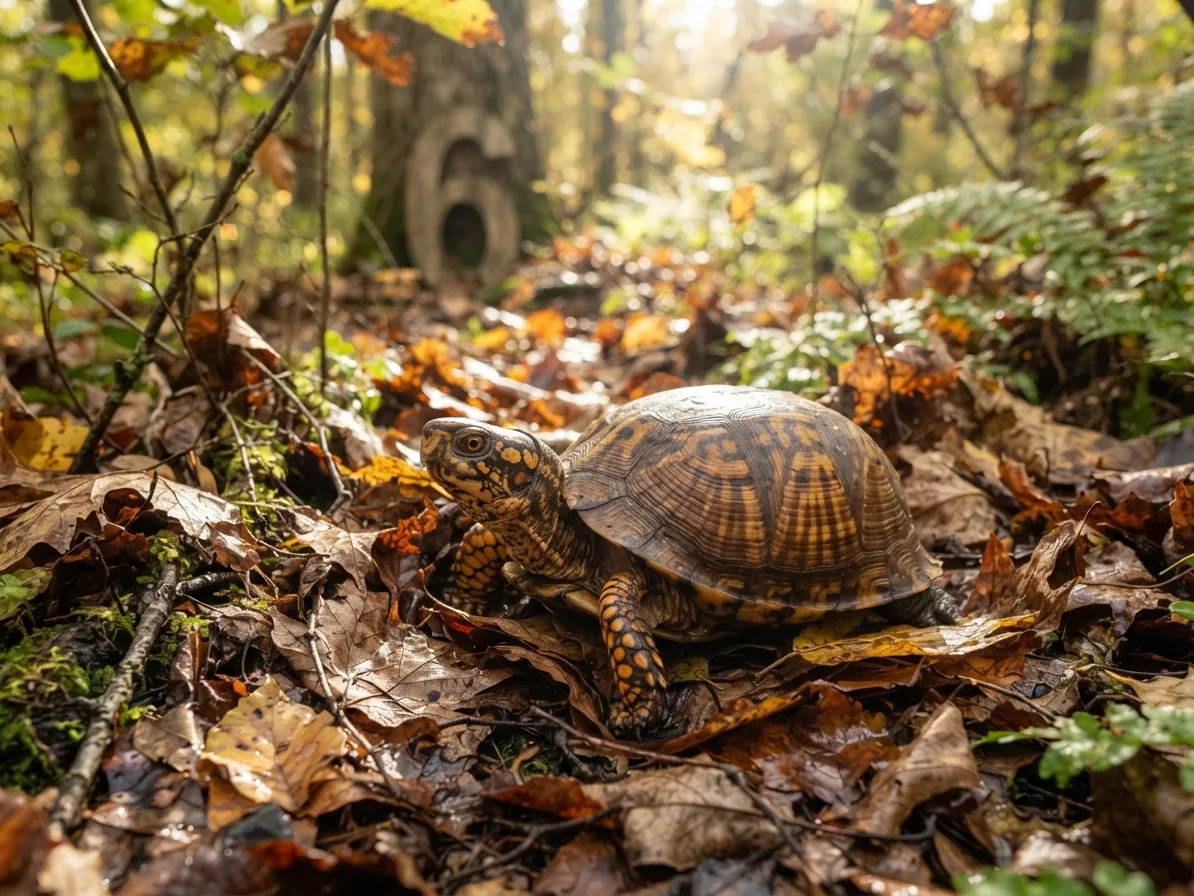
Artificial paint severely compromises a turtle’s ability to survive in the wild. “There’s also a very important survival issue for a wild Eastern box turtle: camouflage,” Poindexter noted. “Their natural brown, yellow, and orange patterns blend beautifully with leaves, soil and the dappled forest floor. That’s part of their protection. Covering that natural camouflage with bright blue or red paint can make an animal that normally almost disappears into its surroundings stand out dramatically.” Emphasizing her point online, she stated, “A turtle’s shell is NOT a blank canvas.”
The facility’s team has been soaking Pickett in warm water and gently scrubbing her shell in small sections with Dawn dish soap and a toothbrush. When dealing with stubborn areas, they cautiously apply minimal amounts of mineral spirits, ensuring fresh airflow prevents the turtle from inhaling fumes, immediately followed by a complete rinse.
A Bright Future in Her Native Habitat
The slow process is yielding incredibly promising results. “Our awesome wildlife rehabilitator Etta Lynn Denny has been patiently working with her every day,” the center shared in an update. “This is not something we can rush. We’re removing only a little paint at a time, taking great care not to damage her living shell underneath.” Over the course of six days, approximately half of the paint was successfully cleared. Throughout the ordeal, Pickett has been eating, drinking, and “acting like a box turtle should” while under specialized care.
Once the cleanup is complete and her natural camouflage is fully restored, Venitia plans to bring the turtle back to the exact yard where she was found. The rescue organization fully supports returning her to familiar territory. “And that part matters,” the center explained. “Eastern box turtles have small home ranges and strong homing instincts, so whenever possible, a rehabilitated box turtle should be returned to the area it came from — not relocated somewhere that simply looks like good turtle habitat.”
The experts strongly advise anyone who finds a wild animal covered in foreign substances to contact a professional veterinarian or licensed rehabilitator rather than attempting to clean it themselves. Above all, Poindexter hopes Pickett’s ordeal encourages the public to appreciate wildlife exactly as it is. “I’d love for people to remember one simple thing from her story,” she shared. “Eastern box turtles are already beautifully painted — by nature.”


