

Key Takeaways
-
A newly developed textile called Plant Armor helped protected strawberry plants yield up to 3.56 times more fruit during tunnel field trials.
-
The fabric blocks insect pests while allowing natural elements through, with researchers noting "the fabric did not impede access to light at all, and fruit production increased significantly."
-
The agricultural technology originated from military research aimed at making soldier body armor more comfortable and resistant to mosquito bites.
Protective fabric dramatically boosts strawberry production
A newly created agricultural textile is demonstrating remarkable success in boosting strawberry crop yields. During tunnel field trials, strawberry plants covered by a protective fabric known as Plant Armor produced over three times as much fruit as uncovered plants, all while maintaining excellent plant health. The technology also shows promise for reducing the agricultural industry’s reliance on chemical pesticides and irrigation.
Designed for protection and growth
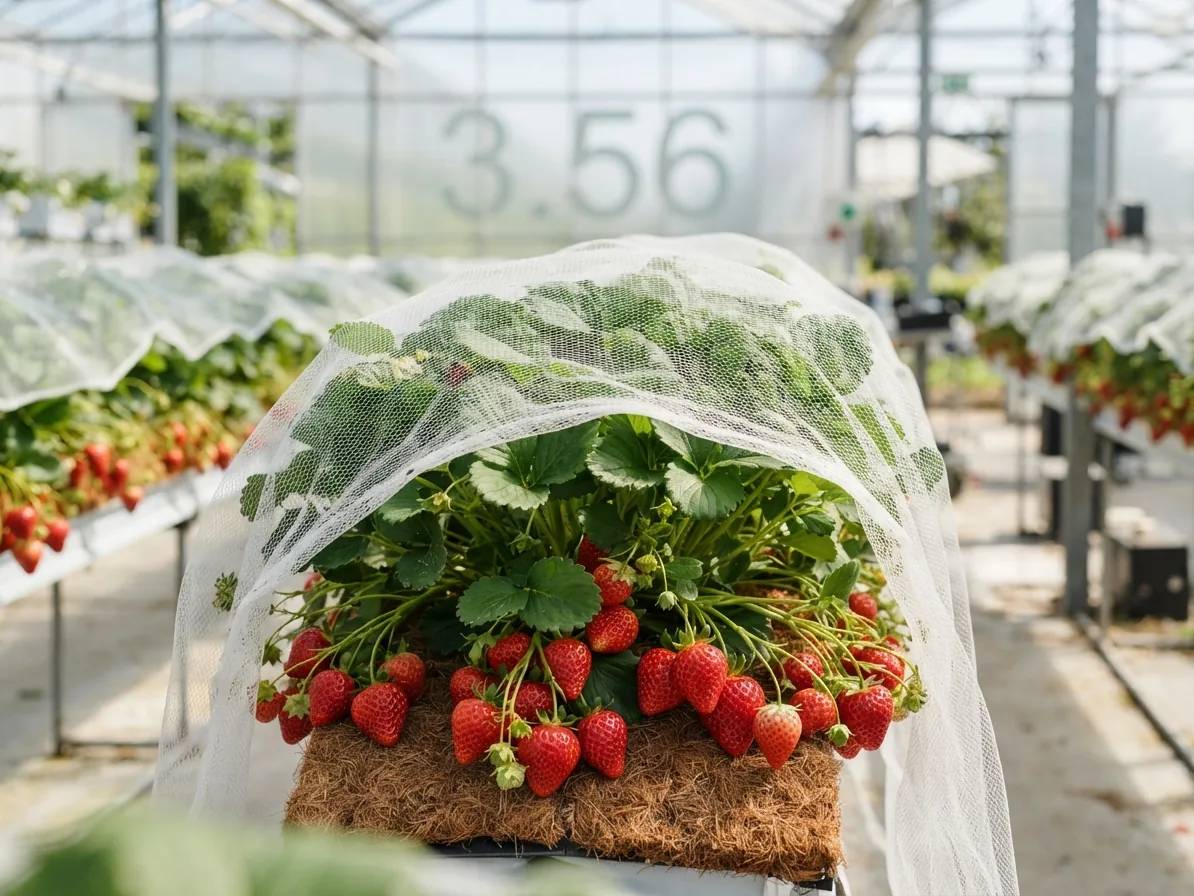
Plant Armor features a three-dimensional layered structure designed to physically block insects from accessing the crops. Despite its protective barrier, the material remains porous enough to let essential sunlight, rain, and air filter through to the plants. In tests, the protected strawberries yielded up to 3.56 times more fruit than those grown without the cover, with no negative impacts on relative humidity or light availability.
Researchers were initially curious about how the material would affect the growing process. “To produce fruit, plants need sunlight,” noted Gabriel Olawuyi, a researcher at North Carolina State University and the study’s lead author. He explained that the team initially thought the covering might cause the plants to favor leaf and stem growth over fruiting. “However, we found the fabric did not impede access to light at all, and fruit production increased significantly.”
Warming effects and earlier harvests
Beyond keeping pests away, the fabric naturally generates a steady warming effect across the growing seasons. This extra heat allowed the covered strawberries to reach their fruiting stage much faster than exposed plants.
“The plants were in a condition whereby the warmth they need to go through each phenological stage to their production was given to them optimally, and they produced far more than the uncovered plants,” Olawuyi added.
From military gear to farm fields
Surprisingly, the inspiration for Plant Armor originated outside the agricultural sector. The concept grew from efforts to design military uniforms that could resist mosquito bites and make body armor more comfortable for soldiers to wear.
“The path to Plant Armor started with trying to make a cloth to go on a soldier’s chest to make body armor more comfortable,” explained co-author R. Michael Roe. “Then, through trial and error, we arrive at a product which could triple the output of strawberry farms here in North Carolina.”
Roe emphasized the immense value of scientific collaboration across different fields. “We couldn’t have predicted that when we started. Without all these people here doing research and following the science, we wouldn’t have arrived at this product.”


