

Key Takeaways
-
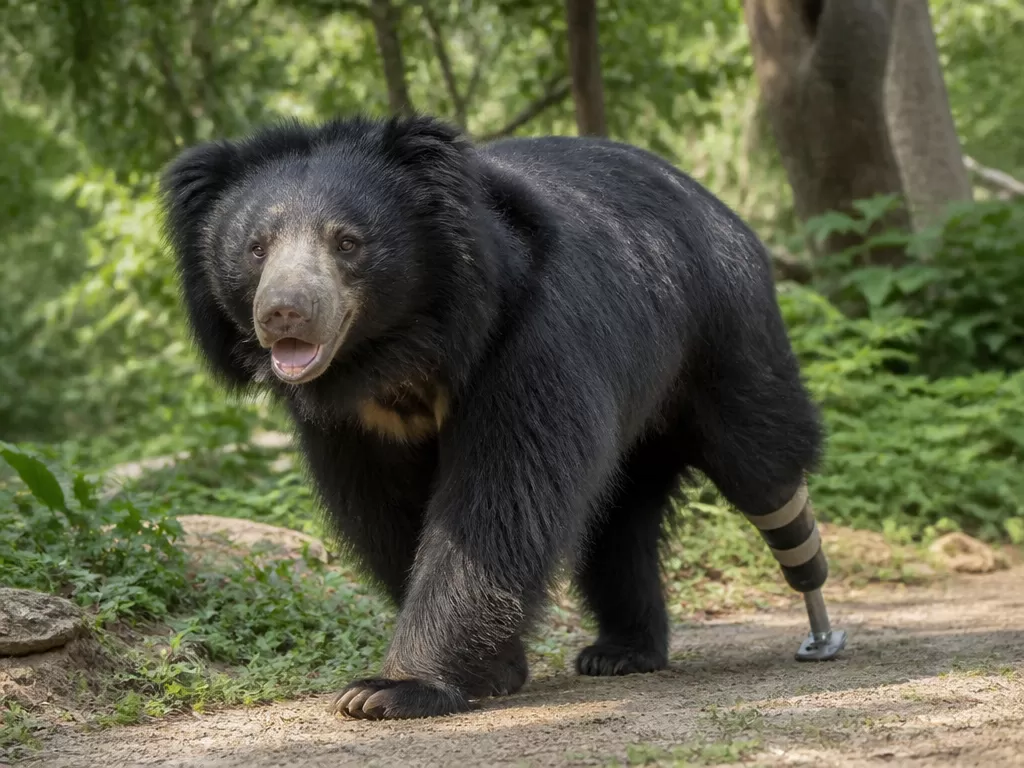
Vasi, a rescued sloth bear in India, made history by becoming the first bear in the world to be fitted with a custom prosthetic limb.
-
After losing his left hind paw to a wire snare trap in 2019, Vasi was outfitted with the new leg by a renowned animal orthotist in September 2025.
-
The successful rehabilitation highlights ongoing conservation efforts to protect sloth bears from habitat loss and poaching while giving injured animals a second chance at a happy life.
A historic milestone for a resilient sloth bear
In a groundbreaking moment for veterinary medicine and animal rescue, a sloth bear named Vasikaran—affectionately known as Vasi—has become the first bear in the world to receive a custom prosthetic limb. Vasi’s journey from a life-threatening injury to walking comfortably again highlights the extraordinary lengths that caretakers will go to for wildlife in need.
Vasi was rescued in 2019 after his left hind paw was caught in a brutal wire snare trap in India. Unfortunately, veterinarians determined the paw was beyond saving and had to perform an amputation. For years, Vasi navigated his sanctuary home on three legs, demonstrating the incredible resilience characteristic of his species.
Everything changed when Derrick Campana, an animal orthotist celebrated for outfitting animals of all sizes with custom prosthetics, stepped in to help. In September 2025, Campana traveled to India to fit Vasi with a first-of-its-kind prosthetic limb. To the immense joy of his caretakers, Vasi quickly accepted the new leg, placing his left hind foot on the ground comfortably for the first time in years.
The sanctuary where Vasi lives operates the world’s largest sloth bear rescue facility in Agra, India. The dedicated team there provides specialized care for bears rescued from poaching, the illegal dancing bear trade, and various severe injuries, ensuring each animal enjoys the highest possible quality of life.
Sloth bears, widely believed to be the inspiration for Baloo in “The Jungle Book,” are remarkable creatures. Known for their uniquely shaggy coats and specialized noses that act like vacuums for termite mounds, they are also the only bear species that regularly carry their cubs on their backs. Despite facing ongoing threats from habitat loss and human-wildlife conflict, stories like Vasi’s shine a hopeful spotlight on the species, proving that dedicated conservation and compassionate care can truly change lives.


