

Key Takeaways
- An assessment of 682 children across 36 centres showed social and emotional development scores rose by 26.5 percentage points.
- Early numeracy grew by 17.9 percentage points, motor development by 11.9 points and early literacy by 11 points.
- Phase two introduces offline resources and expanded coaching for 127 educators, principals and leaders in the Free State.
Play-based learning lifts early childhood skills across Free State centres
Young learners who initially recorded the lowest marks achieved the most substantial growth during the first year of an early childhood development initiative in South Africa. An evaluation of Sesame Workshop South Africa’s Watch Play Learn initiative showed improvements across every evaluated discipline among 682 participating youngsters aged 4 to 6.
Assessment results from 36 centres across the Free State revealed that social and emotional development scores rose by 26.5 percentage points. Significant gains were recorded across other foundational skills as well, with early numeracy advancing by 17.9 percentage points, motor development improving by 11.9 percentage points and early literacy rising by 11 percentage points. These metrics capture percentage-point score growth rather than the overall share of progressing pupils.
Building on practical lessons for the next phase
The findings were shared in QwaQwa during the rollout of the initiative’s second phase, backed by Sesame Workshop South Africa, Standard Bank and the Free State Department of Education. The initial targets aimed to reach more than 2,300 boys and girls aged 3 to 6 while equipping 86 educators. The programme successfully met its student enrollment goal and expanded its training support to 127 educators, principals and centre leaders across all 36 continuing centres.
Mari Payne, deputy managing director and senior director of education and programmes at Sesame Workshop South Africa, noted both the triumphs and practical obstacles observed during the initial implementation. “The first year gave us encouraging evidence that Watch Play Learn is making a difference, with meaningful gains in every area of development we assessed,” Payne said.
First-year operations encountered connectivity challenges in certain facilities, limiting smooth access to digital materials. Educators also sought further assistance to transform videos, stories and music into participatory tasks. In response, phase two introduces offline content access, expanded mentoring and coaching, structured lesson schedules aligned with daily routines, closer coordination with the provincial curriculum and elevated implementation monitoring.
Emphasising the need to empower front-line educators, Payne added: “If we want learning through play to make a meaningful difference for children, it has to work for the people delivering it every day.”
Community impact and collaborative learning
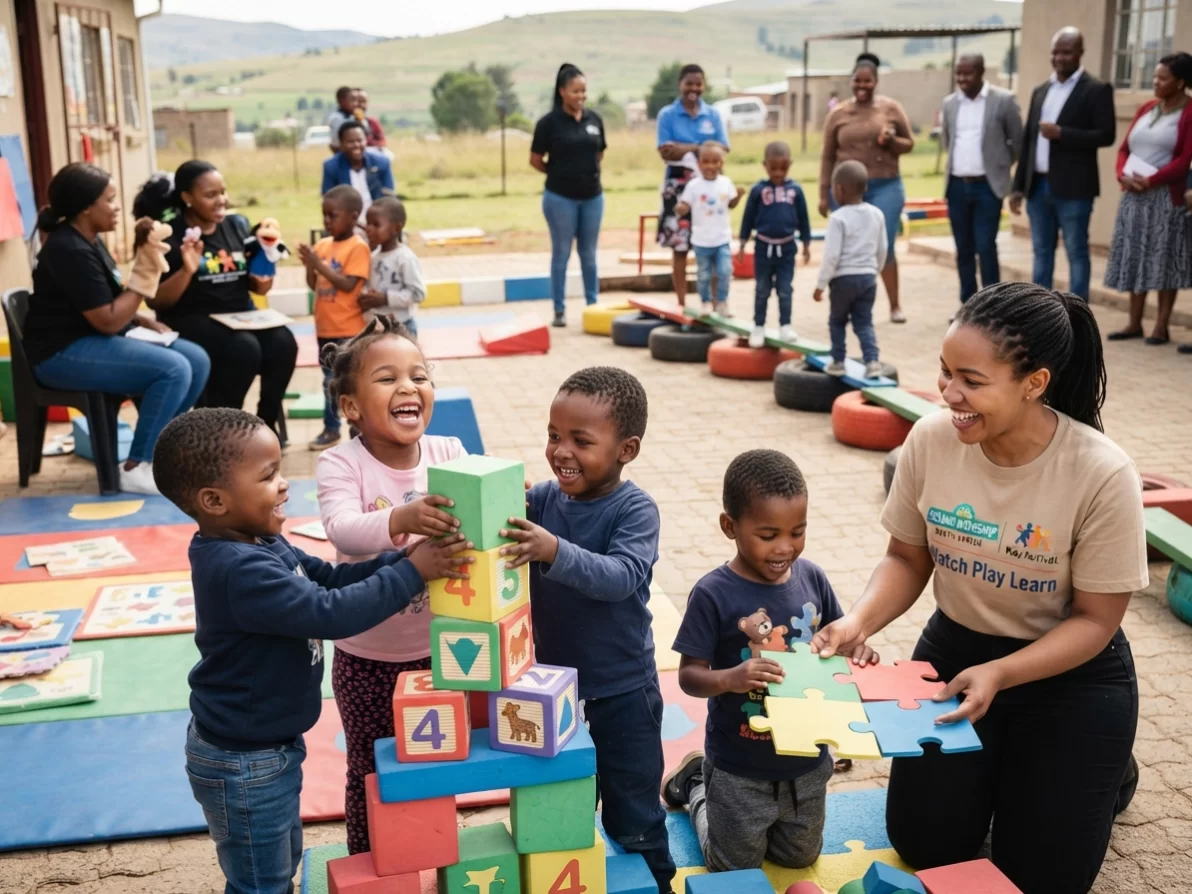
Educators and families noted visible strides in children’s day-to-day engagement, communication skills and self-belief. The launch event in QwaQwa featured centre visits, data discussions and a lively Play Festival that brought families and children together around playful learning exercises.
Zanele Shabalala, CSI manager at Standard Bank, stated that investing in early childhood development establishes vital pathways toward improved academic success, future employment prospects and active participation in society and the economy, while assisting in addressing wider socio-economic gaps.
Highlighting the value of local evidence, Free State MEC for Education Dr Mantlhake Julia Maboya welcomed the insights gathered from the initiative. “The value of this work lies in what we can learn from it. We now have evidence from children, experience from practitioners and feedback from families that can help us understand what effective early learning support looks like in our communities,” Maboya said.


