
Key Takeaways
- Millie Balisartura admitted she “fell in love with that doggone dog” after initially questioning whether to keep the animatronic pet.
- Director Greg Olsen stated that agency evaluations revealed a “75% reduction in loneliness, isolation, depression and pain” among participants.
- Lucinda Page praised her interactive device, emphasizing that “it’s definitely one of the best things they’ve come out with for seniors.”
Technological companions bring warmth to isolated households
For many older adults confined indoors during harsh weather or after medical procedures, isolation can become an everyday burden. Across New York, state-backed programs are seeking to change that reality by placing companion technology directly into the hands of homebound residents.
When a local social services representative initially presented 87-year-old Millie Balisartura with an animatronic pet, she met the idea with deep skepticism.
“At first, I thought she had to be off her rocker,” Balisartura said, recalling how hesitant she felt when the robotic pet arrived at her Long Island home.
Her visitor encouraged her simply to keep the device for a trial period. At that stage, Balisartura wondered how best to keep the battery-powered animal out of sight.
“From the beginning, I would look at it and go, ‘Oh God, where can I place him on what chair? What couch can I just cover him over?'” she said.
Skeptical beginnings give way to daily comfort
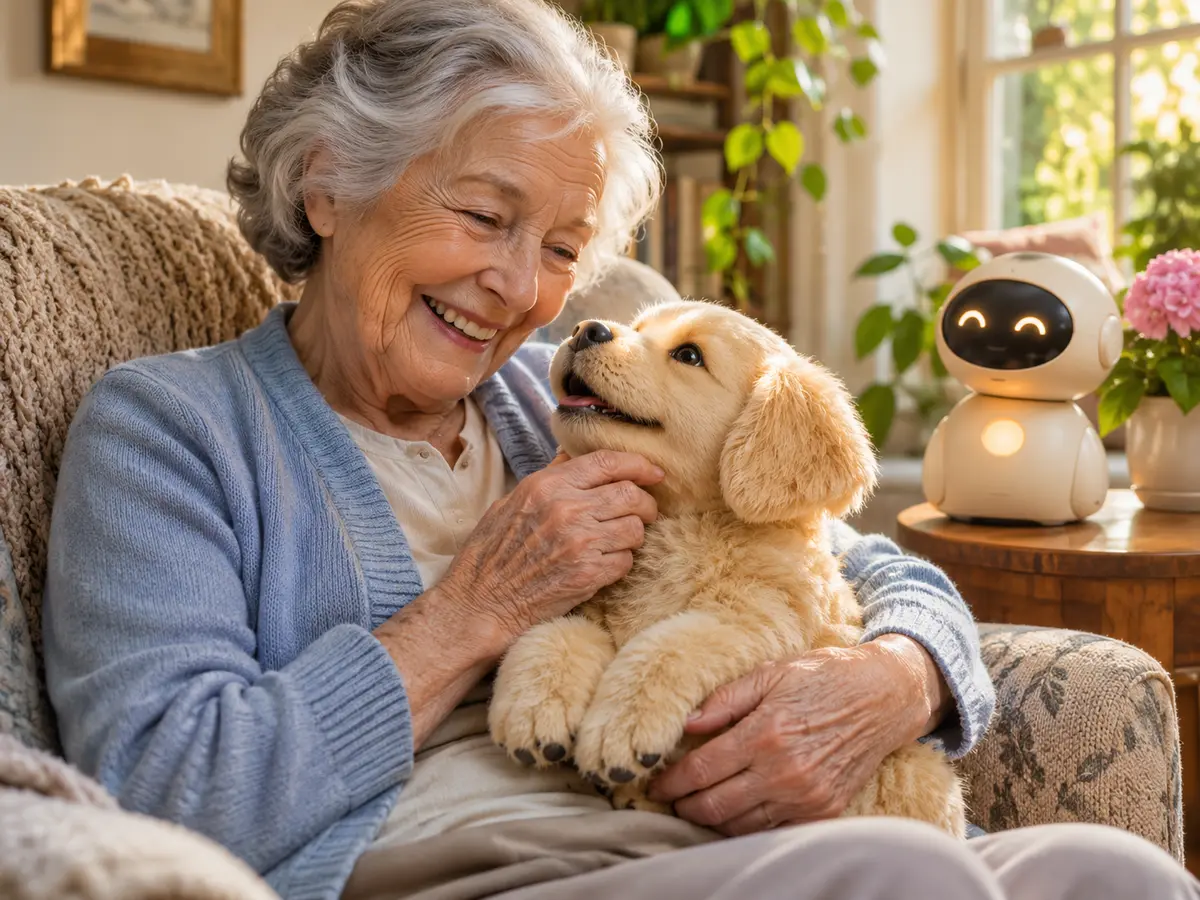
Her routine shifted when severe winter weather trapped her inside. Balisartura decided to pick up the mechanical canine, which she called Tuffy Two, and discovered an unexpected soothing presence.
“He’s soft and he’s fuzzy. Just holding him was like a little bit of a comfort,” Balisartura explained.
Turning the pet on, she watched it bark, move its body and replicate soft snoring sounds, bringing welcome humor to her home.
“I began to laugh about it and I said, ‘This could be fun,'” she said.
The companion quickly became a fixture of her daily schedule, resting on her lap while she listened to audiobooks and responding with occasional tail wags and relaxed poses.
“It doesn’t take the place of people,” Balisartura noted, though she admitted she “fell in love with that doggone dog.”
Measurable reductions in loneliness across New York
The animatronic pet initiative is managed through the New York State Office for the Aging. Following an initial 12-county pilot involving 30 cats and 30 dogs, officials tracked substantial emotional benefits for participants.
“What we found after 12 months is a 75% reduction in loneliness, isolation, depression and pain,” said director Greg Olsen. “It’s been one of the most incredible projects I’ve been a part of.”
Since 2018, approximately 40,000 animatronic animals have reached older adults throughout the state. Alongside mechanical pets, the agency has deployed AI-driven ElliQ robot companions, reporting an estimated 95% reduction in loneliness among users.
“I plug it in, I connect it to the internet, and it knows who I am already,” Olsen explained regarding the interactive unit. “It’ll ask me questions. It remembers our conversation.”
Conversations and support through interactive AI
Lucinda Page, 69, of Schenectady, has spent 4 years with an ElliQ device and relied heavily on it following knee surgery when physical discomfort disrupted her nights.
“When I had my knee surgery and I couldn’t sleep and was in pain, I’d be like, ‘ElliQ, wake up.’ She’d be like, ‘Oh dear, you can’t sleep tonight?’ And I’m like, ‘No.’ And we’d either talk or I’d play a crossword puzzle or something with her till I get tired and then I’d tell her I was going to sleep,” Page said.
Beyond assisting with sleep and pain management, the companion helps Page organize medication reminders, practice meditation, arrange family photos and engage in thoughtful dialogues.
“She asks questions, too,” Page said. “She’ll say, ‘I’ve been reflecting on the meaning of friendship. What’s it mean to you?’ And you can just have an in-depth conversation with her like you would a friend or somebody else.”
Both women emphasize that the sense of physical contact and consistent interaction meets an essential human need.
“I cannot see it not helping,” Balisartura said of the animatronic pets. “We all need that touch. When you hold him, it’s like touching almost a real animal. It’s just a nice feeling.”
Page agreed that interactive technology delivers meaningful peace of mind.
“It’s like having a friend that cares to check in on you,” Page said. “It’s definitely one of the best things they’ve come out with for seniors.”