
Key Takeaways
-
A remote camera in Watarrka National Park is livestreaming a desert waterhole to global viewers.
-
The setup uses solar power and satellite internet to capture animals like dingoes and wallabies.
-
Ecologist Jennifer Davis states, "The livestream allows us to see what's coming in, what's drinking, what the behaviors are and how they might also change as the planet warms."
Bringing a remote desert ecosystem to global screens
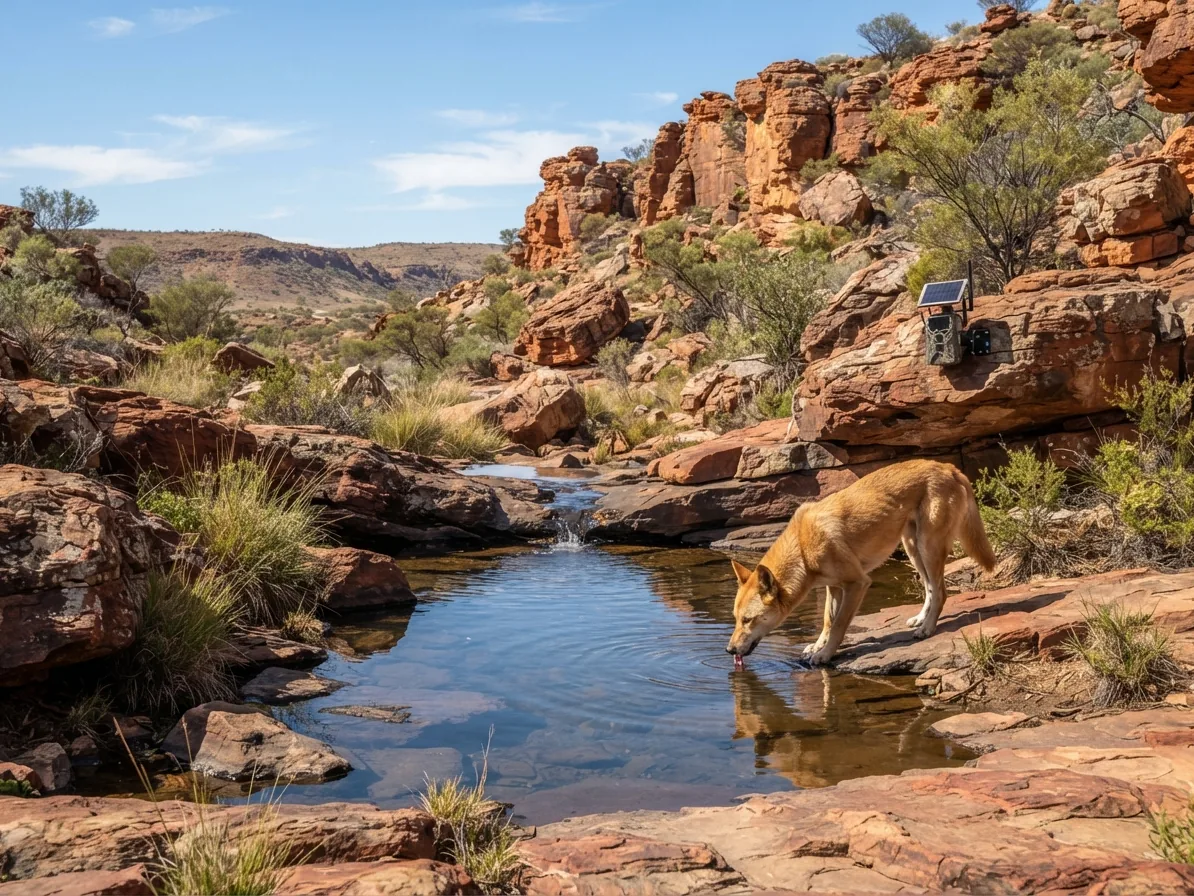
In a secluded area of Watarrka National Park, far removed from regular tourist paths, a hidden camera is broadcasting a desert waterhole to viewers around the world. The project allows anyone to observe the natural activities of local wildlife without causing any human disturbance to the environment.
Animals such as dingoes, wallabies, frogs, and even a wedge-tailed eagle have been captured on the broadcast stopping for a drink. Organized by Northern Territories Parks and Wildlife alongside Charles Darwin University’s Research Institute for the Environment and Livelihoods, the camera operates using a combination of solar power, compact computing, and satellite internet.
Monitoring ecological changes in real time
Freshwater ecologist Jennifer Davis developed the initiative after spending years using motion-activated cameras to document wildlife. The new permanent setup provides a continuous look at the temporary waterhole, broadcasting ambient sounds of nature like rainfall, croaking frogs, and birdsong.
“The livestream allows us to see what’s coming in, what’s drinking, what the behaviors are and how they might also change as the planet warms,” Davis noted.
The location holds ancestral importance for the Matutjara people and is situated over 800 miles south of Darwin. Because the pool relies on rain to remain full, researchers are keeping a close watch on its fluctuations.
“As a freshwater ecologist, I’m really keen to see when there’s water present…we’re looking for what’s happening with global warming because, at this site, the only real impact on the amount of water present is going to be climate change,” Davis explained.