

Key Takeaways
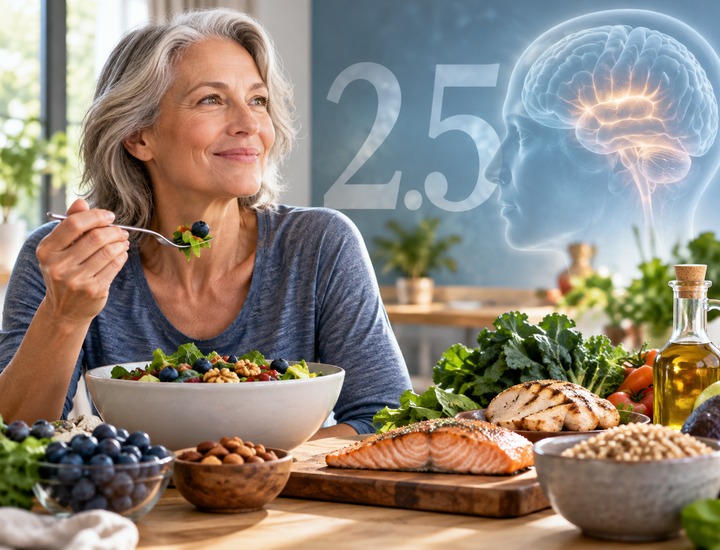
- A study tracking 1647 adults over an average of 12 years found each 3-point increase in MIND diet score delayed grey matter loss by about 2.5 years.
- Higher consumption of berries and poultry was linked to slower ventricular enlargement, whereas sweets and fried fast foods correlated with greater hippocampal atrophy.
- Researchers observed: “These findings reinforce the potential of the MIND diet as a brain-healthy dietary pattern and support its role in strategies aimed at slowing neurodegeneration in aging populations.”
Decade-long tracking reveals slower loss of brain tissue
Eating habits that blend elements of the Mediterranean diet and the blood pressure-lowering DASH plan may actively protect the brain from physical decline. In a long-running investigation published in the Journal of Neurology Neurosurgery & Psychiatry, researchers followed 1647 middle-aged and older adults from the Framingham Heart Study Offspring cohort over an average period of 12 years. The study, which began tracking participants who averaged 60 years of age and had no history of stroke or dementia, examined how closely individuals followed the MIND diet and paired those dietary scores with regular MRI scans between 1999 and 2019.
While normal aging led to decreases in total brain, white matter, and grey matter volumes alongside expanding fluid-filled ventricles, adults with higher MIND diet adherence demonstrated notably slower structural loss. Grey matter, which underpins learning, memory, and information processing, deteriorated at a markedly reduced rate in those who followed the diet. Specifically, every 3-point gain on the 15-point adherence scale corresponded to a slower grey matter loss of 0.279 cm³ per year—a 20% reduction in age-related loss that translates to approximately 2.5 years of delayed brain aging. Ventricular enlargement also slowed by 0.071 cm³ per year for every 3-point increase, representing an 8% deceleration in tissue loss and about 1 year of delayed aging.
Specific foods and their distinct structural patterns
The MIND eating pattern emphasizes leafy greens, various vegetables, berries, nuts, whole grains, fish, beans, poultry, and olive oil, while advising individuals to limit cheese, butter, red meat, pastries, and fried fast foods. When evaluating individual foods, researchers observed that certain items drove specific outcomes.
| Food category | Associated structural brain outcome |
|---|---|
| Berries | Slower expansion of ventricular volume |
| Poultry | Slower ventricular enlargement and slower grey matter loss |
| Sweets | Faster ventricular enlargement and greater hippocampal atrophy |
| Fried fast foods | Larger decline in hippocampal volume |
| Whole grains | Faster losses of grey matter and hippocampal volume, faster ventricular enlargement |
| Cheese | Slower declines in grey matter and hippocampal volume, less ventricular expansion, fewer white matter hyperintensities |
To explain some of these biological effects, the authors observed: “MIND-recommended foods rich in antioxidants, such as berries, and high-quality protein sources like poultry may reduce oxidative stress and mitigate neuronal damage.” Conversely, they pointed out that “fried fast foods, often high in unhealthy fats, trans fats, and advanced glycation end-products, may contribute to inflammation and vascular damage.”
Lifestyle combinations and research caveats
The protective relationships were notably stronger in older participants, as well as in individuals who engaged in more physical exercise and maintained a weight outside the overweight or obesity categories. These findings suggest that pairing nutritious meal choices with regular activity may provide a combined defense against age-related structural decline.
Because the investigation was observational, it cannot establish a direct cause-and-effect link. The authors acknowledged limitations including reliance on self-reported food frequency questionnaires, the inability to completely exclude early mild cognitive impairment at baseline, and a predominantly White study demographic. Nevertheless, the study offers encouraging structural evidence, with researchers concluding: “These findings reinforce the potential of the MIND diet as a brain-healthy dietary pattern and support its role in strategies aimed at slowing neurodegeneration in aging populations.”


