

Key Takeaways
-
Cambridge engineers developed an optical spectrometer chip costing around ten dollars that matches benchtop laboratory precision.
-
The miniature sensor demonstrated reliable, non-invasive monitoring of blood glucose, lactate, and alcohol levels without needle pricks.
-
With strong temperature resilience and low computing power demands, the device is technically primed for integration into consumer wearables.
A breakthrough in wearable diagnostics
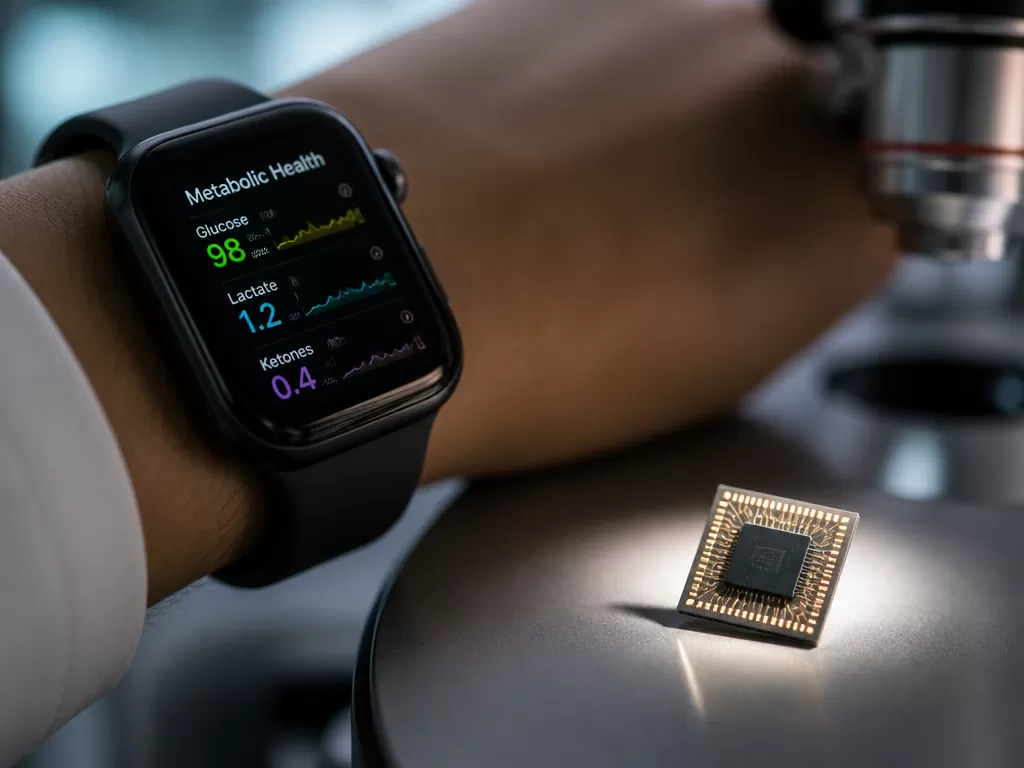
Researchers have engineered an ultra-compact optical spectrometer capable of delivering laboratory-grade chemical analysis directly from everyday consumer electronics. Costing roughly ten dollars to produce and measuring only a few centimeters across, the miniature photonic sensor could soon revolutionize personal health monitoring by offering continuous, needle-free tracking of vital biomarkers such as blood glucose, alcohol, and lactate.
Optical spectrometers analyze how light interacts with matter to identify substances and measure their concentrations. While these instruments are indispensable across medicine, manufacturing, and environmental science, traditional efforts to shrink them have consistently compromised measurement precision, resolution, and operating range. To overcome these hurdles, the development team introduced an optical convolutional spectrometer built on a silicon nitride platform. By applying the convolution theorem directly within the optical domain, the device captures light spectra rapidly and with immense noise tolerance, avoiding the heavy computational demands that previously hampered miniaturized designs.
In rigorous validation tests, the chip identified pharmaceuticals, plastics, and various food samples with a 100 percent classification success rate, even exceeding the precision of standard benchtop laboratory equipment in measuring solution concentrations. Most notably, the sensor reliably monitored human biomarkers under physiological conditions, including demonstrating non-invasive blood sugar tracking without requiring repetitive finger pricks.
The sensor is also built to endure everyday environments, maintaining reliable operation in temperatures spanning from -20°C to 80°C. With its low cost, minimal power requirements, and scalable architecture, this innovative hardware brings the prospect of laboratory-quality health insights straight to the wrist.


