

Key Takeaways
-
A wastewater treatment plant in Atlantic City has installed the world's first dedicated microplastics filtration system.
-
Created by PolyGone Systems, the nature-inspired technology mimics wetland plants and removed over 98 percent of microplastics in lab tests.
-
The low-energy, scalable design specializes in capturing the tiniest plastic particles before they enter marine ecosystems.
A breakthrough in keeping microplastics out of our oceans
For decades, municipal wastewater treatment plants have successfully filtered out bacteria, chemicals, and biological waste, but microscopic plastic particles have largely slipped straight through into waterways and oceans. Now, a treatment facility in Atlantic City, New Jersey, has become the first in the world to tackle the challenge head-on by installing an innovative system designed specifically to capture microplastics.
Developed by PolyGone Systems—a startup founded by Princeton University graduates Nathaniel Banks and Yidian Liu—the system was introduced without any regulatory mandate requiring it. Backed by a federal grant, the installation aims to curb the flow of synthetic fibers, tire particles, and industrial fragments that otherwise accumulate in marine ecosystems and food chains.
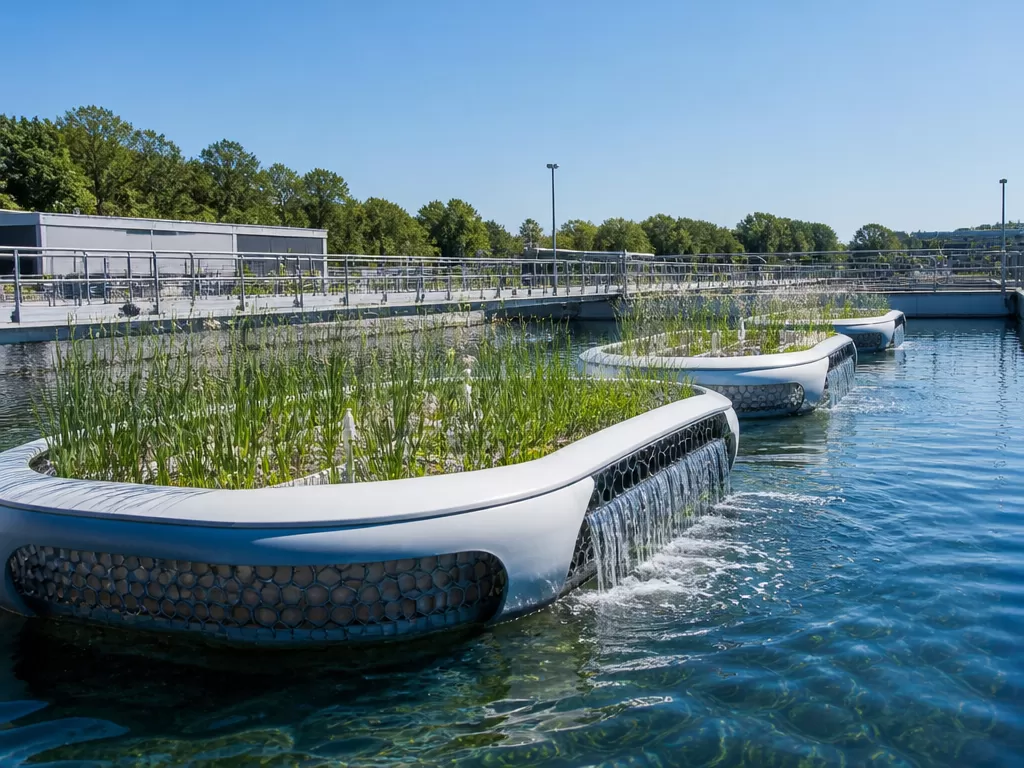
Rather than relying on conventional, energy-intensive filtration methods, the founders drew on their architectural backgrounds to invent a technology called Polypods. The design mimics the unique surfaces of ultrahydrophobic wetland plants, which naturally attract and capture microplastics as water flows past. This biomimetic approach requires minimal material and consumes very low energy while achieving over 98 percent microplastic removal in laboratory testing.
The technology excels at catching the smallest and most elusive particles, which are typically the hardest to filter and the most prone to being absorbed by living tissue. With another system operational in California and home-scale versions in the works, this breakthrough offers a promising, scalable blueprint for communities seeking to protect their waters.


