
Key Takeaways
-
A dedicated crew aboard the vessel Typhoon has removed over 1,140 tonnes of trash across more than 10,000 operations along Greece's remote coastlines.
-
By cataloging every collected item, the team created the largest marine pollution database in the Mediterranean to support university oceanographic research.
-
The data prompted the launch of the land-based Cyclone project and school outreach initiatives to tackle pollution at its inland sources.
Turning remote beach cleanups into powerful marine science
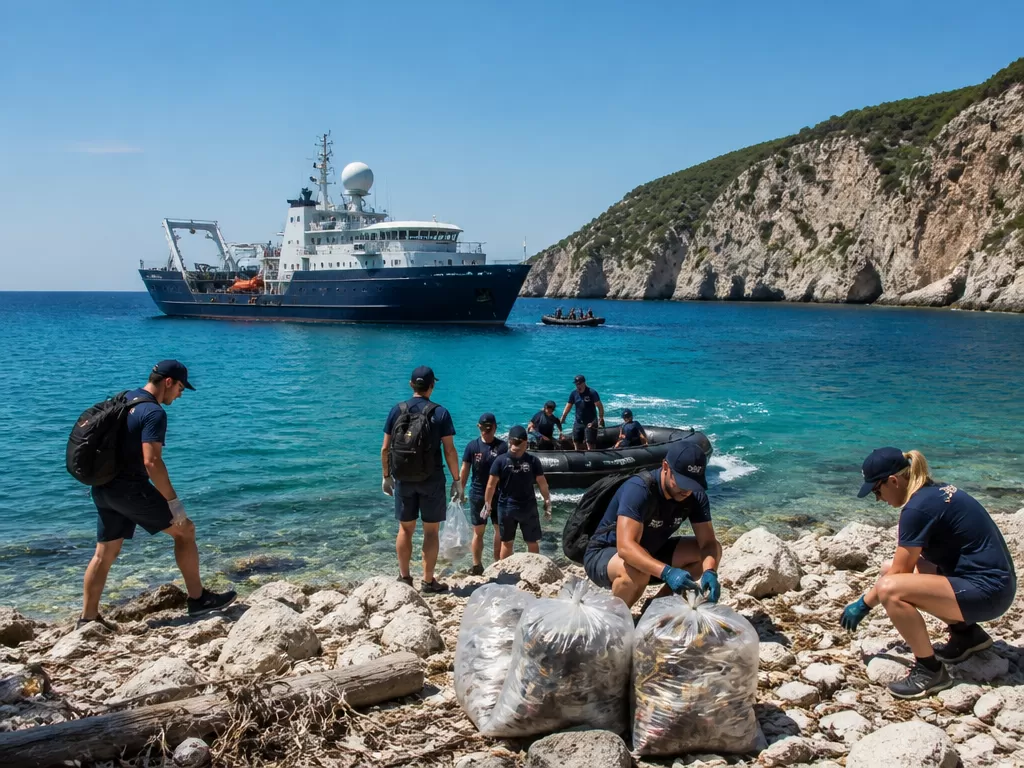
Greece features the longest coastline of any Mediterranean nation, leaving thousands of hidden shores and uninhabited islets virtually inaccessible by land. Since 2019, an ambitious environmental initiative has been taking to the water to protect these untouched landscapes. Operating aboard the 72-meter ship Typhoon, a dedicated 20-person crew deploys daily on inflatable boats to clear, sort, and log between 500 and 1,000 kilograms of marine debris, routing recyclable material to dedicated processing centers.
Over the course of more than 10,000 cleanup operations, the initiative led by the Athanassios C. Laskaridis Public Benefit Foundation has successfully removed 1,140 tonnes of coastal trash—an amount comparable to roughly 22 Olympic-sized swimming pools. Yet the true transformation lies in what happens immediately after the bags are hauled aboard. Every single piece of debris is cataloged by item and location, creating the Mediterranean’s largest comprehensive database on marine pollution.
This rich dataset is actively aiding university researchers in mapping seabed waste and tracking surface plastics through remote sensing technology. The data also revealed that much of the coastal debris originates from inland waterways and unmanaged landfills rather than maritime activities. In response, the foundation launched “Cyclone,” an inland sister program deploying teams to clean rivers, lakes, and archaeological sites, alongside classroom programs that engage students directly on the beaches to foster long-term environmental stewardship.