

Key Takeaways
- Architect Chris Downey models soundscapes for new buildings, using spatial audio labs to ensure spaces are acoustically accessible before construction.
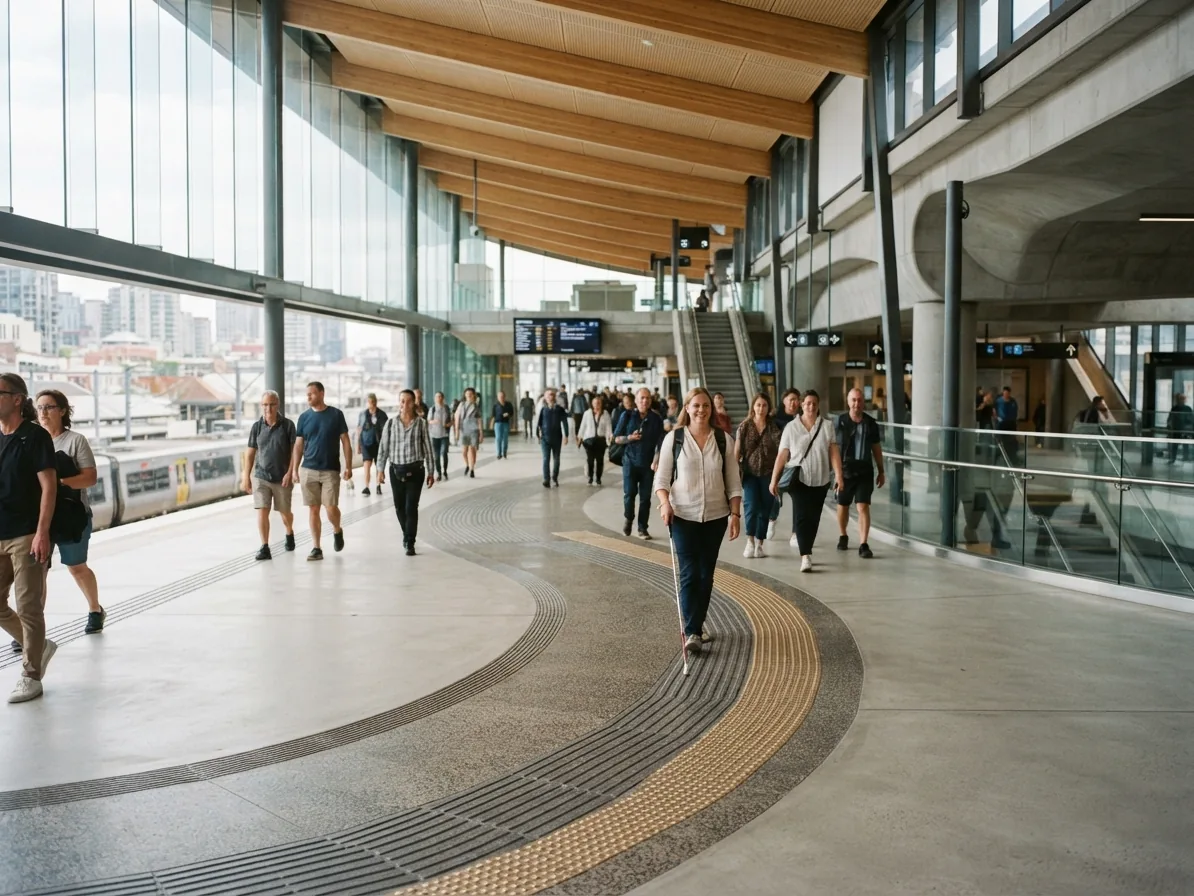
- Textured concrete pathways provide both visual and tactile guidance in transit centers, offering an inclusive alternative to standard warning strips.
- Experts emphasize that moving beyond basic accessibility compliance allows designers to create welcoming, engaging environments for everyone.
Designing With Sound in Mind
An inspiring movement in urban design is transforming how people navigate built environments by prioritizing the acoustic properties of public spaces. When architect Chris Downey lost his sight in 2008, he discovered that subtle differences in the pitch of wind chimes along his street helped him identify his home. He recognized that sounds could define the physical contours of a space as effectively as walls or doors.
Downey developed design principles that embrace sound and other senses to enhance the experience of navigating the built environment. Collaborating with an engineering firm’s immersive spatial audio lab, he simulates the soundscapes of proposed structures. For a project combining campuses for Deaf and blind students in Indiana, Downey explained, “We’re not adding sounds to it,” and added, “We’re letting the architectural space and material shape the sound.” The design subtly shifts the acoustics to guide students from reflective hallways to dampened areas near classrooms.
Expanding the Definition of Accessibility
Effective design goes beyond sound. In the busy Salesforce Transit Center, Downey opted for textured pathways instead of relying solely on acoustic cues, providing an elegant visual and tactile guide that is inclusive. He noted that such designs are “more approachable, and less stigmatizing.”
Inclusive planning also involves embracing different perspectives. Blind architect Paul DeFazio recognizes that accessibility is just the beginning. “People say that accessibility is the foundation of the house,” DeFazio said. “A house with just a foundation isn’t going to be very welcoming. It feels like we’re never getting to the part that’s above that foundation; the ceiling, the interesting parts. It’s time for us to expand what ‘access’ means.”
Technological and Natural Soundscapes
Advancements like smartphone navigation apps and distinct electric vehicle sounds offer new layers of independence. Even so, many appreciate “inadvertent accessibility”—the naturally occurring sounds of an environment, like a clicking railroad or the acoustic signature of a fence, which add joy to the journey of finding one’s way.

