
Key Takeaways
- A major study of multi-omic data indicates allergies may begin with a bioenergetic failure inside epithelial barrier cells rather than within the immune system.
- Patients with eosinophilic esophagitis exhibited reduced mitophagy, showing an impaired ability to clear damaged cellular mitochondria.
- Researchers plan to track infant barrier cells directly to assess whether mitochondrial energy loss precedes the onset of allergic diseases.
Rethinking how allergic disease begins
Researchers are exploring a novel hypothesis that could transform modern understanding of allergies, suggesting that the root problem may not begin within an overactive immune system, but rather from an energy failure in the body’s protective barrier cells. These epithelial layers line essential surfaces such as the skin, gut, nose, lungs, and esophagus. When these boundary tissues struggle to generate adequate cellular power under modern environmental burdens, they may end up activating the immune alarms associated with conditions like eczema and food intolerances.
Clinical immunologist Professor Peter Smith, based at Griffith University’s School of Medicine and Dentistry, led an international team investigating this mechanism. The researchers assembled an extensive collection of multi-omic data, bringing together molecular information across 116 case-control cohorts, 2,164 cohorts, and 3,776 patients.
“For 60 years, we’ve taught that allergies start with the immune system and the barrier breaks as a consequence, but our work suggests it may be the other way around,” Professor Smith said. “Allergy diseases, which now affect up to one in three children, may start one step earlier as a power failure in the mitochondria of the epithelial cells which form the body’s barrier surfaces.”
Mitochondria and cellular energy stress
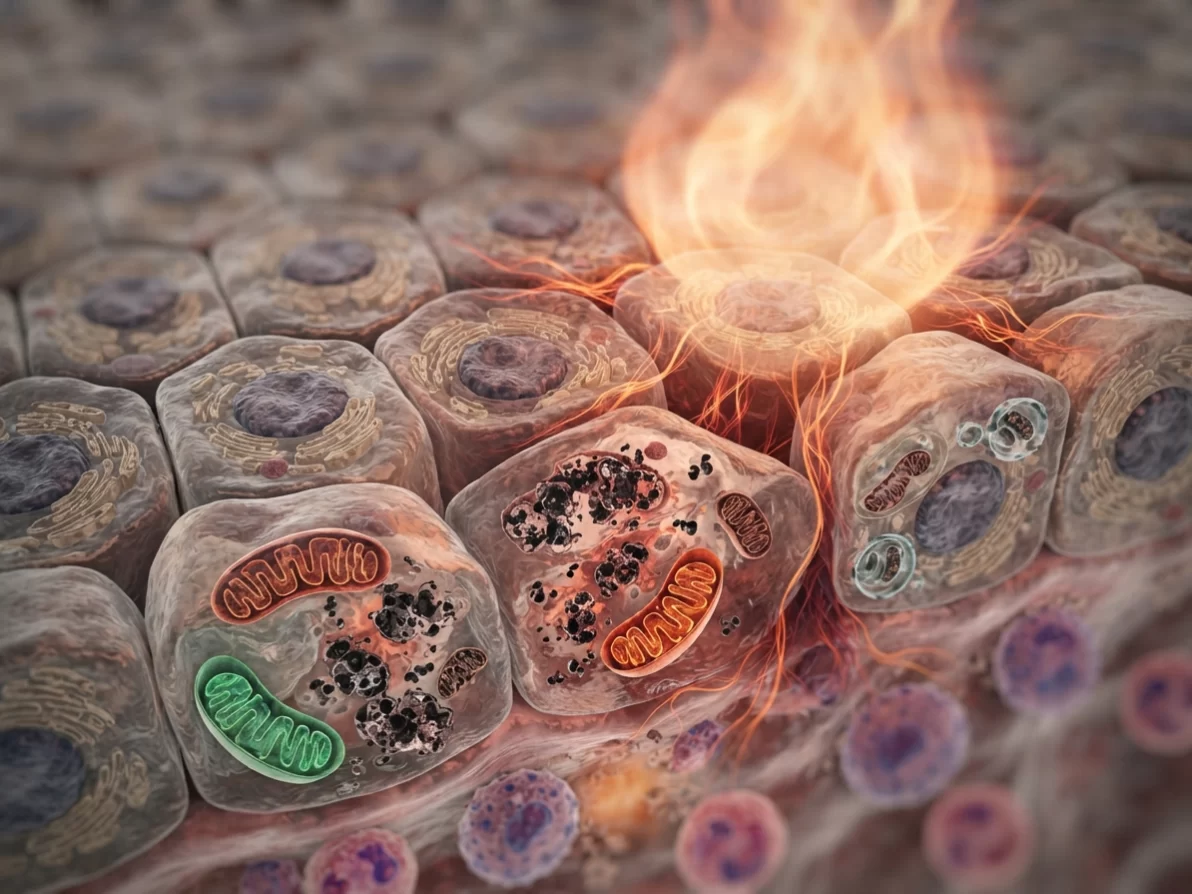
Mitochondria supply the majority of the chemical energy necessary for vital cellular activities, including tissue maintenance, barrier repairs, and defense against external stressors. According to the research team, compromised cellular energy stores prevent these epithelial tissues from responding adequately to everyday pressures.
“The barrier cell can’t meet the energy and stress demands of the modern environment, so raises the alarm too easily, and the immune events we recognize as an allergy follow,” Professor Smith explained. He noted that the bioenergetic model “could help to explain why some children have eczema, food allergies, hay fever, asthma and related conditions.”
The study found its strongest biological evidence in patients with eosinophilic esophagitis, an allergic disorder characterized by chronic inflammation of the esophagus. Across 13 independent patient groups suffering from the disease, researchers detected suppressed activity in mitophagy, the natural biological recycling mechanism that cleans out damaged mitochondria. Alterations in barrier integrity and antioxidant defenses were also observed in the skin of eczema patients, even in areas without visible inflammation. The researchers noted that this biological pattern was not seen across every condition; established asthma and nasal polyps did not display it, while hay fever presented only partial evidence.
Environmental pressures and the cycle of relapse
The hypothesis suggests that numerous contemporary lifestyle and environmental factors could converge on this single cellular vulnerability. Contributors could include microplastics, air pollution, detergents, ultra-processed diets, lower fiber consumption, and antibiotic exposure in early life.
Associate Professor Nic West, a molecular immunologist at Griffith University’s School of Pharmacy and Medical Sciences and co-author of the study, highlighted why current therapies often struggle to provide permanent relief. “The research also explains why allergies can relapse,” Associate Professor West said. “Once inflammation is established, it damages the barrier further.”
He noted that current clinical approaches face clear limitations: “Today’s drugs act downstream, so the disease often returns when treatment stops as they do not reach the root cause.”
Looking toward earlier detection
The international research collaboration—which involved experts from institutions in Mount Sinai, Leuven, Cork, Southampton, Zurich, Miami, Singapore, and Aberdeen—emphasizes that these conclusions remain a hypothesis requiring further verification. Nonetheless, it offers a hopeful fresh perspective for future treatments.
“We have spent our careers managing the smoke, and for the first time we think we can see the fire, and it is not where everyone was looking,” Professor Smith said. “This is not a cure but is something we have never had before — a logical starting point.”
Looking ahead, researchers hope to confirm whether this energy breakdown happens prior to the appearance of clinical symptoms. “The next step is to measure these cells directly in infants before the allergy develops,” Professor Smith said.