

Key Takeaways
- The experimental drug FEBP-sTβRII uses a molecular tag to target tumor-specific fibronectin, breaking down protective barriers while largely sparing healthy tissues.
- In preclinical mouse models, the treatment eliminated 75% of aggressive pancreatic tumors and generated immune memory that protected against tumor recurrence and other cancers.
- Safety testing is underway for a human-grade version of the drug, with clinical trials for resistant solid tumors slated to begin in 2027.
Targeted therapy breaks down tumor barriers in preclinical study
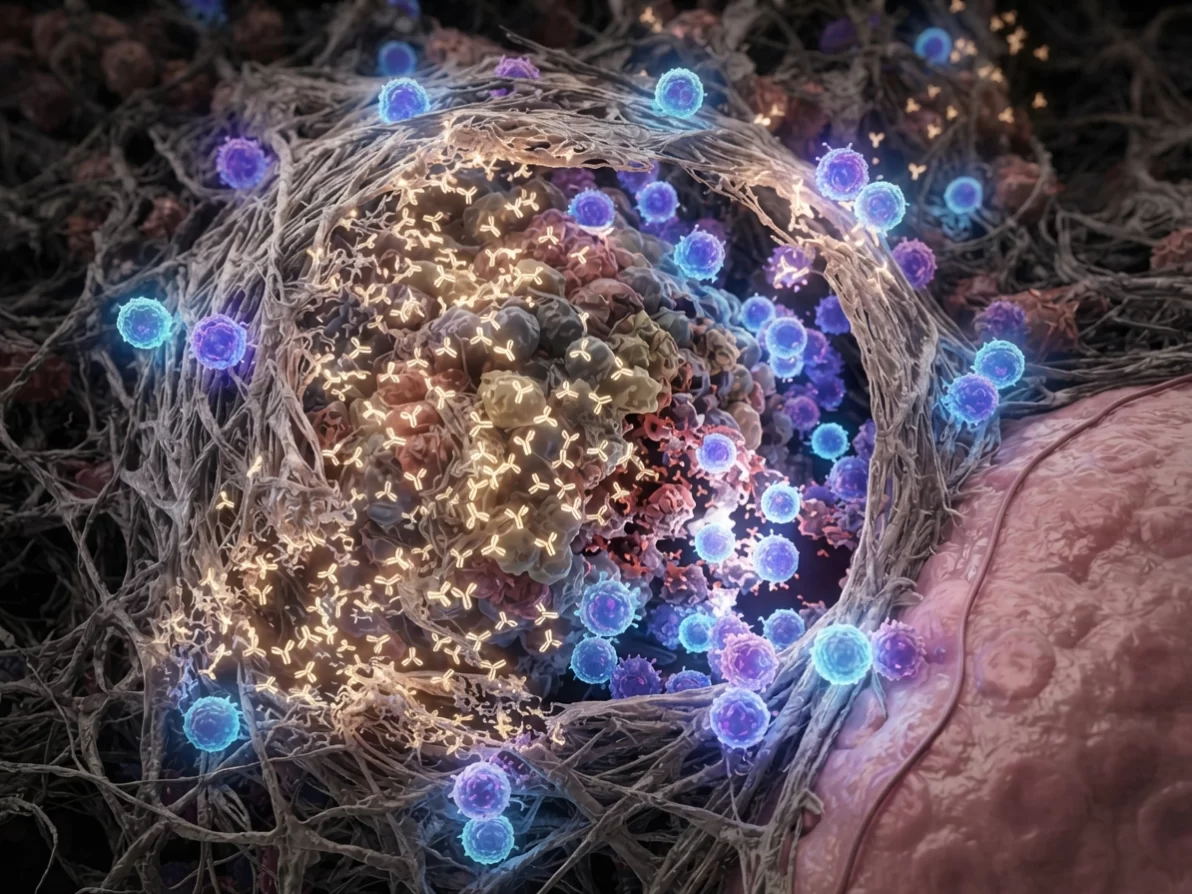
An innovative experimental cancer therapy has succeeded in breaking through the dense protective barriers that shield solid tumors from immune system attacks. In laboratory animal models, the targeted medicine dismantled these defenses, cleared aggressive pancreatic cancers, stopped metastatic breast cancer, and generated durable immune protection.
Solid tumors, including those found in the pancreas, breast, colon, and lung, frequently surround themselves with thick, fibrous tissue that prevents cancer-fighting T cells from penetrating the tumor mass. This dense physical and biological barrier has long restricted the success of standard immunotherapies to a small percentage of patients with solid cancers.
Precision targeting overcomes historic treatment hurdles
Tumors generate large volumes of a signaling molecule known as TGF-β, which directs surrounding tissue to form protective scar-like structures while deactivating nearby immune cells. Past therapeutic efforts to block TGF-β throughout the entire body were limited by safety issues, as effective doses interfered with the molecule’s normal roles in healthy tissues.
To solve this problem, an international research team led by Dr. Seong-Jin Kim at MedPacto, Inc., alongside co-author Dr. John J. Letterio, engineered a targeted TGF-β blocker called FEBP-sTβRII. The treatment carries a special molecular tag that binds selectively to a specific variant of fibronectin. This protein is heavily concentrated inside tumors but is rarely found in healthy adult tissues, allowing the drug to accumulate inside tumors for multiple days without broadly affecting normal tissues. While an untargeted blocker disrupted 693 genes in circulating blood, the newly engineered targeted version altered only 25.
Highlighting the broader implications of targeting the tumor microenvironment, Dr. Letterio explained, “TGF-β helps build the defenses of many solid tumors, so this approach has the potential to reach well beyond a single cancer.”
Immune reprogramming and lasting biological memory
Once the drug breached the tumor’s outer shell, infiltrating T cells released interferon-gamma, initiating a powerful chain reaction. The surrounding support cells and local immune cells shifted their function, presenting tumor fragments to the immune system and creating a sustained cycle of antitumor activity.
The therapeutic results observed in mouse models showed significant disease regression:
- In an aggressive pancreatic cancer model, tumors completely vanished in 75% of treated mice, with seven out of eight animals surviving 270 days after completing therapy.
- In triple-negative breast cancer models, the compound slowed tumor expansion, prevented migration to the lungs, and lengthened survival.
- When paired with an existing anti-PD-1 immunotherapy, the experimental agent nearly eliminated pancreatic tumors that had previously resisted immunotherapy alone.
- Animals whose original tumors cleared successfully rejected the reintroduction of the same cancer months later, while many also resisted newly introduced bladder and lung tumors.
- Transferring T cells from treated animals into cancer-free recipients granted those mice protection against bladder cancer.
Describing the enduring effects of the therapy, Dr. Letterio stated, “By delivering the blocker directly to the tumor, we don’t just open the door to T cells. We appear to be teaching the immune system lessons it remembers long after the tumor is gone, and in some cases those lessons protect against other cancers.”
Path toward human clinical evaluation
The patterns of immune activation seen in the animal models parallel responses documented in human melanoma, gastric cancer, and pancreatic cancer patients who responded well to immunotherapy treatments. Furthermore, screening patient tissue for the specific targeted form of fibronectin could help identify who is most likely to benefit.
Emphasizing the importance of tumor-specific drug delivery, senior author Dr. Seong-Jin Kim remarked, “This study shows that where you block TGF-β matters as much as whether you block it.”
A version of the therapeutic agent designed for humans is currently undergoing safety evaluations, with initial clinical trials scheduled for 2027 to assess safety and effectiveness in patients whose solid tumors have resisted conventional treatments.