

Key Takeaways
-
Pilot Esther Keim revived a decades-old tradition of dropping Thanksgiving turkeys from an airplane to remote households in Skwentna, Alaska.
-
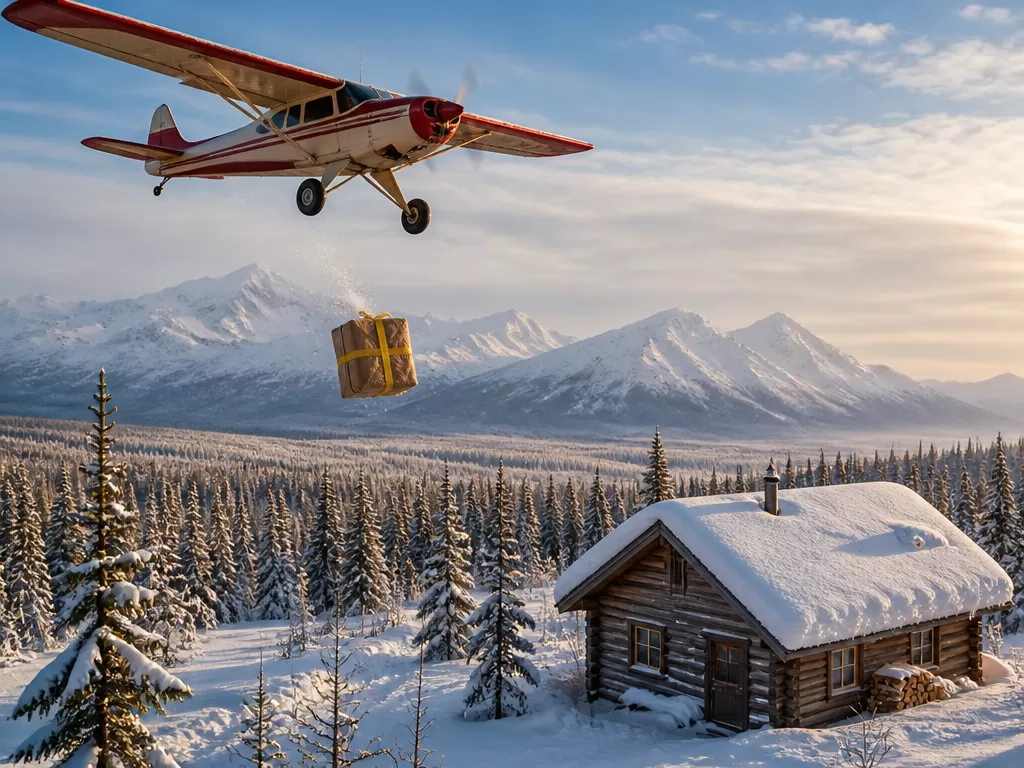
Turkeys are packed securely into volunteer-sewn burlap sacks wrapped with bright yellow tape so they can be easily spotted in deep snow.
-
The ongoing airborne mission delivers holiday meals and community connection across 75 miles of roadless wilderness.
Reviving a high-flying holiday tradition in remote Alaska
For residents of Skwentna, Alaska, holiday cheer often arrives straight from the sky. Nestled in a rugged wilderness with no connecting roads, grocery stores, or traditional power grids, families living off the grid rely on airplanes, riverboats, and snow machines for supplies. Decades ago, a generous local pilot named Kenny Hughes began a beloved custom known as the “Alaska Turkey Bomb,” dropping Thanksgiving turkeys and small gifts from his aircraft directly onto the snowy properties of isolated neighbors.
Esther Keim grew up in Skwentna watching those deliveries, recalling how even small gestures like a pack of gum tucked inside a dropped newspaper brought immense joy to children who could not simply visit a store. Years later, after moving to Wasilla and earning her private pilot’s license, Keim returned to visit her hometown. Learning about the difficult winter conditions and sparse food supplies her former neighbors had endured, she resolved to follow in Hughes’s footsteps using her own single-engine Stinson airplane.
Rallying community support, Keim gathered donations and partnered with volunteers who stitched durable burlap sacks marked with high-visibility yellow tape so the frozen birds could be spotted quickly in deep snow. She completed her first mission across roughly 75 miles of remote terrain, delivering three dozen turkeys to thankful residents.
The annual flights have since become a treasured routine. For off-grid residents who face long, isolated winters, the deliveries provide far more than a holiday dinner—they serve as a heartfelt reminder that their neighbors are looking out for them from above.