
Home Blog Page 2

A roundup of global positive news highlights health and environmental wins

A roundup of global positive news highlights health and environmental wins

Key Takeaways

  • The ozone layer continues to show signs of recovery alongside new deforestation bans for koala habitats.
  • Medical advancements include a new medication to reduce childhood epilepsy seizures and an AI robot performing independent gallbladder surgery.
  • Cultural and social initiatives are expanding, highlighted by increased book sales and a growing digital organ donation registry.

Environmental milestones and wildlife protection

Global conservation efforts are showing positive results. Recent reports indicate that the ozone layer is continuing to recover. In a major win for wildlife, a halt on deforestation has been implemented to establish a newly protected area for koalas. Additionally, a new low-emission zone has officially come into effect in Palma, promoting cleaner air and healthier urban environments.

Medical breakthroughs and health benefits

The medical field is celebrating significant advancements that promise to improve lives. A newly developed medication is successfully reducing epilepsy seizures in children. In a groundbreaking surgical achievement, an artificial intelligence robot has independently performed its first gallbladder procedure. Everyday habits are also being celebrated for their wellness benefits, with recent highlights emphasizing that reading and taking naps are good for overall health.

Social progress and technological achievements

Social and cultural initiatives are thriving. A new Friendship Pass has officially launched to foster connections. Meanwhile, the book industry has recorded an increase in sales, reflecting a renewed public interest in literature. Furthermore, the digital organ donation register has seen substantial growth one year after its launch, and France is taking steps to improve public health by banning nicotine pouches starting in 2026. In the realm of science, researchers are also exploring a new material described as exceptionally hard, pointing to exciting future applications.
“The costs of not having what we need are too high,” Alaska brewery masters Remote Vertical Farming

"The costs of not having what we need are too high," Alaska brewery masters Remote Vertical Farming

Key Takeaways

  • Skagway Brewing Company produces 250 pounds of fresh lettuce each week using an indoor aeroponic system to bypass vulnerable supply chains.
  • The sustainable closed-loop farm uses captured carbon dioxide from the beer fermentation process to boost crop yields by an estimated 20 percent.
  • During the winter, the brewery donates surplus greens or sells them at cost to local schools, a senior center, and the town market.

Securing fresh food in a remote community

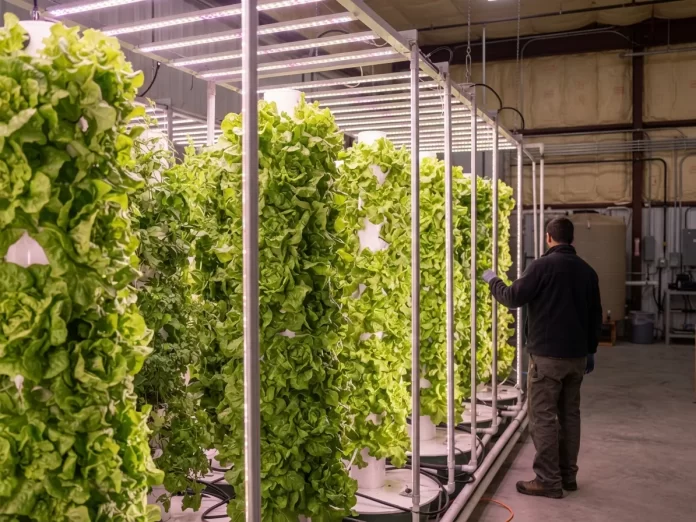
In the isolated town of Skagway, Alaska, access to fresh produce has historically been a significant challenge. Home to about 1,000 year-round residents and inundated by over 1.3 million summer cruise ship passengers, the community relies heavily on a barge system to bring food up from the lower states. To solve this local problem, the Skagway Brewing Company built an indoor aeroponics farm on the top floor of its facility, producing 250 pounds of artisanal lettuce each week.

The closed-loop aeroponic system, affectionately named the Raven’s Nest, uses nutrient-rich mist sprayed directly onto plant roots without the use of soil or pesticides. Owner Mike Healy launched the initiative to establish a steady, fresh food source for the town, while striving to create “the most sustainable brewpub on the planet.”

An innovative approach to sustainable agriculture

Operating a farm inside a brewery offers unique synergistic benefits. The facility captures carbon dioxide from the beer fermentation process and pipes it directly into the third-floor garden to accelerate plant growth. Healy estimates this carbon capture strategy will increase the overall harvest by more than 20 percent this year. Furthermore, the heat generated by the LED grow lights warms the staff offices during the freezing Alaskan winters, and yeast byproducts are composted for local town gardens.

While purchasing the equipment came with challenges, including the original vendor going out of business, the local team successfully rebuilt and optimized the system through trial and error. Farm manager John Michael Mead emphasizes that a hands-on approach remains vital. “A lot of times, these systems rely too much on automation,” Mead explained, highlighting the need for careful observation. “It’s important to have human contact. You have to be able to walk your system, understand what’s going on, and know if your plants are healthy.”

Feeding the community year-round

The Raven’s Nest cultivates sweet crisp, butter crisp, red oak, a romaine-sweet crisp hybrid, and fresh basil. While the busy summer season consumes most of the harvest, the winter months generate a surplus. The brewery donates or sells this excess produce at cost to local schools, the senior center, and the town market. Bypassing the traditional agricultural supply chain also has major environmental benefits.

“In the long term, when you think about greens being grown in the desert in Arizona, then driven all the way to Seattle and then shipped up to Alaska on a boat — that’s a lot of diesel, a lot more fuel, and a much bigger sustainability impact,” Mead noted.

Despite the high costs of electricity and maintenance, the project serves as a successful model for remote indoor agriculture. “In places that have a lot of sun and easy access to roads and freeways, it doesn’t make a lot of sense,” Mead said about the complex aeroponic setup. “But in Alaska, it’s dumb not to. The costs of not having what we need are too high.”

Recent positive developments in health, education and technology spark global optimism

Recent positive developments in health, education and technology spark global optimism

Key Takeaways

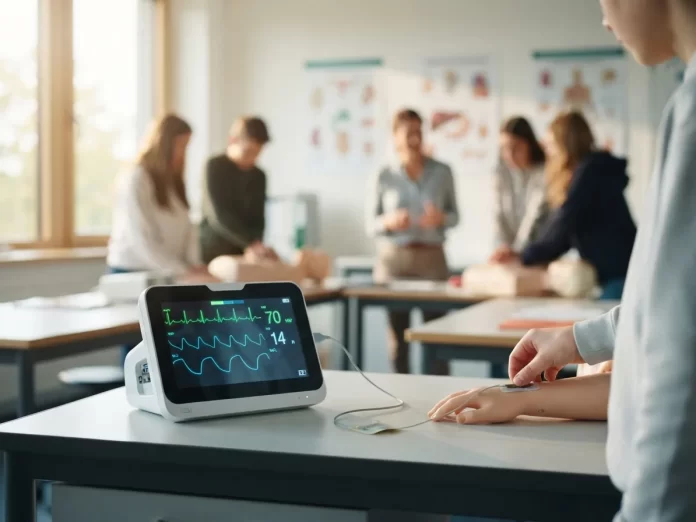
  • North Rhine-Westphalia is integrating life-saving resuscitation training into its school curriculum.
  • A new wireless sensor can measure patient vital signs entirely without physical contact.
  • Germany is experiencing a record high in public approval for organ donation alongside a drop in antibiotic prescriptions.

Health innovations and educational advancements take center stage

A series of uplifting developments across health, education, and society are offering reasons for optimism. In Germany, the state of North Rhine-Westphalia is taking a proactive approach to public safety by introducing resuscitation training directly into school classrooms. This educational initiative aims to equip young people with life-saving skills.

Medical breakthroughs and societal milestones

In the medical field, a newly developed sensor is now capable of measuring vital signs without the need for cables or physical contact, promising greater comfort and mobility for patients. Additionally, Germany is seeing a record high in public approval for organ donation, a trend that could save countless lives. Healthcare practices are also improving, with a notable reduction in antibiotic prescriptions across the country, while warning labels on e-cigarettes are successfully lowering usage.

Global progress in environment and housing

Positive news extends beyond healthcare. People in Germany are once again founding new businesses, showing renewed economic confidence. Meanwhile, New York has implemented rent freezes to support residents. Environmental and safety technologies are also advancing, highlighted by new techniques for the safe disposal of nuclear waste and helpful guidelines ensuring that people can forage for mushrooms safely in nature.

Innovative sound architecture empowers navigation in modern spaces

Innovative Sound Architecture Empowers Navigation in Modern Spaces

Key Takeaways

  • Architect Chris Downey models soundscapes for new buildings, using spatial audio labs to ensure spaces are acoustically accessible before construction.
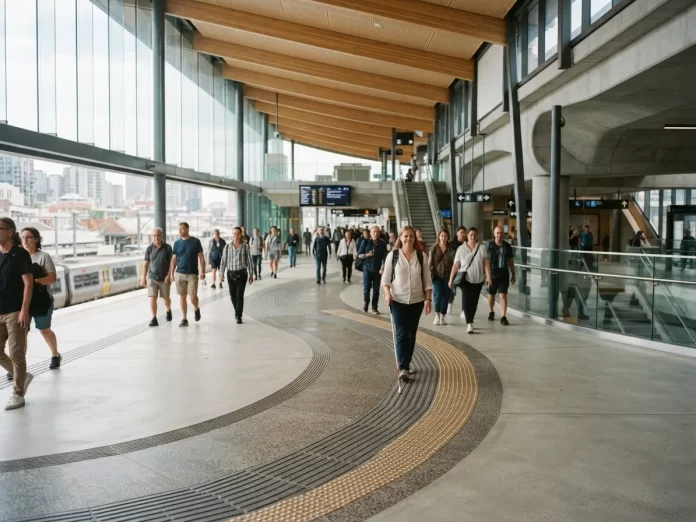
  • Textured concrete pathways provide both visual and tactile guidance in transit centers, offering an inclusive alternative to standard warning strips.
  • Experts emphasize that moving beyond basic accessibility compliance allows designers to create welcoming, engaging environments for everyone.

Designing With Sound in Mind

An inspiring movement in urban design is transforming how people navigate built environments by prioritizing the acoustic properties of public spaces. When architect Chris Downey lost his sight in 2008, he discovered that subtle differences in the pitch of wind chimes along his street helped him identify his home. He recognized that sounds could define the physical contours of a space as effectively as walls or doors.

Downey developed design principles that embrace sound and other senses to enhance the experience of navigating the built environment. Collaborating with an engineering firm’s immersive spatial audio lab, he simulates the soundscapes of proposed structures. For a project combining campuses for Deaf and blind students in Indiana, Downey explained, “We’re not adding sounds to it,” and added, “We’re letting the architectural space and material shape the sound.” The design subtly shifts the acoustics to guide students from reflective hallways to dampened areas near classrooms.

Expanding the Definition of Accessibility

Effective design goes beyond sound. In the busy Salesforce Transit Center, Downey opted for textured pathways instead of relying solely on acoustic cues, providing an elegant visual and tactile guide that is inclusive. He noted that such designs are “more approachable, and less stigmatizing.”

Inclusive planning also involves embracing different perspectives. Blind architect Paul DeFazio recognizes that accessibility is just the beginning. “People say that accessibility is the foundation of the house,” DeFazio said. “A house with just a foundation isn’t going to be very welcoming. It feels like we’re never getting to the part that’s above that foundation; the ceiling, the interesting parts. It’s time for us to expand what ‘access’ means.”

Technological and Natural Soundscapes

Advancements like smartphone navigation apps and distinct electric vehicle sounds offer new layers of independence. Even so, many appreciate “inadvertent accessibility”—the naturally occurring sounds of an environment, like a clicking railroad or the acoustic signature of a fence, which add joy to the journey of finding one’s way.

“It’s the best thing that has happened to my life,” young graduate finds career success at revitalized Nairobi library

Key Takeaways

  • A nonprofit organization has successfully restored historic public libraries in Nairobi into vibrant civic hubs offering free internet, cultural programs, and meals.

  • Community members actively shape the renewed spaces by requesting specific resources like arts programs, digital literacy classes, and books by African authors.

  • The revitalized libraries have served over 192,000 direct users, boosted patronage by more than 240 percent, and created 93 local jobs.

Rebuilding civic infrastructure for a new generation

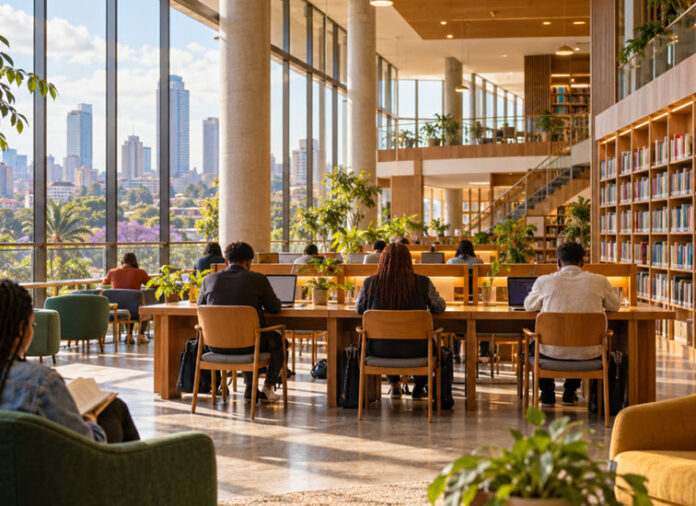
When Sunil Totti needed a reliable place to prepare for a major job interview, he thought of the local Eastlands Library. Home internet and power in his neighborhood were often unpredictable. Fortunately, he found reassurance. He realized, “I know a place where I can go.” The library provided him with a quiet environment, internet access, and a community of supportive peers.

Totti, who graduated in 2023, is pursuing a career in fintech. He remembers the Eastlands Library of his youth as a “very old and dusty place” that he usually avoided. Now, he spends most of his week there. He says, “This is where I work, actually.”

This revitalization is the vision of a nonprofit organization founded in 2017 by writer Wanjiru Koinange and publisher Angela Wachuka. They have successfully restored the Eastlands and Kaloleni libraries, and work is currently underway at the historic McMillan Memorial library. Their goal is to create free civic hubs for culture, skills training, and community connection.

Expanding access to knowledge and opportunity

The restored libraries operate through a partnership where the Nairobi City Council owns the buildings and provides staff, while the nonprofit raises funds and runs programs. Residents actively shape the spaces. They asked for “more arts, plants and chill zones” during community consultations, and they continue to select books through wish lists.

Cultural scholar Dr. Kimani Njogu highlights the welcoming atmosphere of the updated spaces. He says, “You can actually go to a Book Bunk library and have fun.” He adds, “It doesn’t have to be all about school.”

The initiative also prioritizes representation. The nonprofit has cataloged thousands of books, adding numerous titles by African authors and converting texts into Braille and audio formats. Njogu notes, “Often books by African authors are too expensive for African libraries to buy.” The addition of recorded oral histories has helped build a “dynamic space for knowledge production and consumption.”

Measurable growth and future plans

The libraries have seen incredible demand, reporting over 192,000 direct users. Patronage has risen by more than 240 percent, and the revival has created 93 jobs. For users like Totti, the libraries offer a foundation for the future. Totti explains, “It is not actually the space alone.” He says, “For me, it was like a game changer.” He adds that his new opportunities mean “at least I’m starting to become stable financially.”

With thousands of libraries mapped nationwide, the founders hope to provide a blueprint for restoration across Kenya and potentially other regions. For Totti, the impact is already profound. He says the space allowed him “to grow as a person.” He concludes, “It’s the best thing that has happened to my life.”

“The biological response has been much faster than I, and most of us, expected,” researchers celebrate return of 20,000 salmon to Klamath River

Rapid ecological recovery on the Klamath River

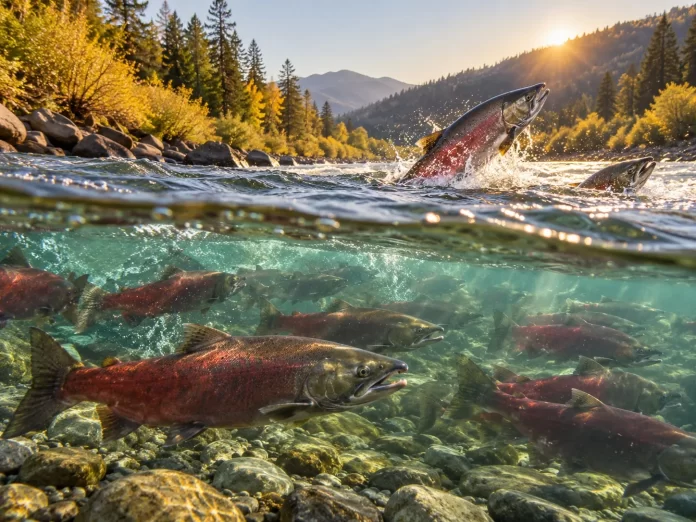
Following the removal of four dams along the Klamath River, which winds through northern California and southern Oregon, an impressive 20,000 chinook salmon have migrated upstream in just two years. The successful return of the fall-run salmon marks a significant milestone in regional river restoration efforts.

Researchers monitoring the recovery are deeply encouraged by the swift ecological rebound. “The biological response has been much faster than I, and most of us, expected,” noted Damon Goodman, the study’s lead author. While challenges regarding water allotments and two remaining dams persist, the thriving fish population stands as a clear indicator of environmental progress.

Expanding healthcare inclusion in Nigeria

In another uplifting development, reproductive health services in Edo state, Nigeria, are actively involving men in family planning. Moving beyond traditional clinic settings, new initiatives aim to make the process more inclusive by “engaging men in places where they live, work and exercise influence within their communities.”

Historically, these clinics were primarily considered spaces for women, but the new educational outreach recognizes the importance of fatherly involvement. By bringing the conversation to community hubs, the programs help build essential support from men, which is known to significantly impact positive health outcomes.