

Key Takeaways
-
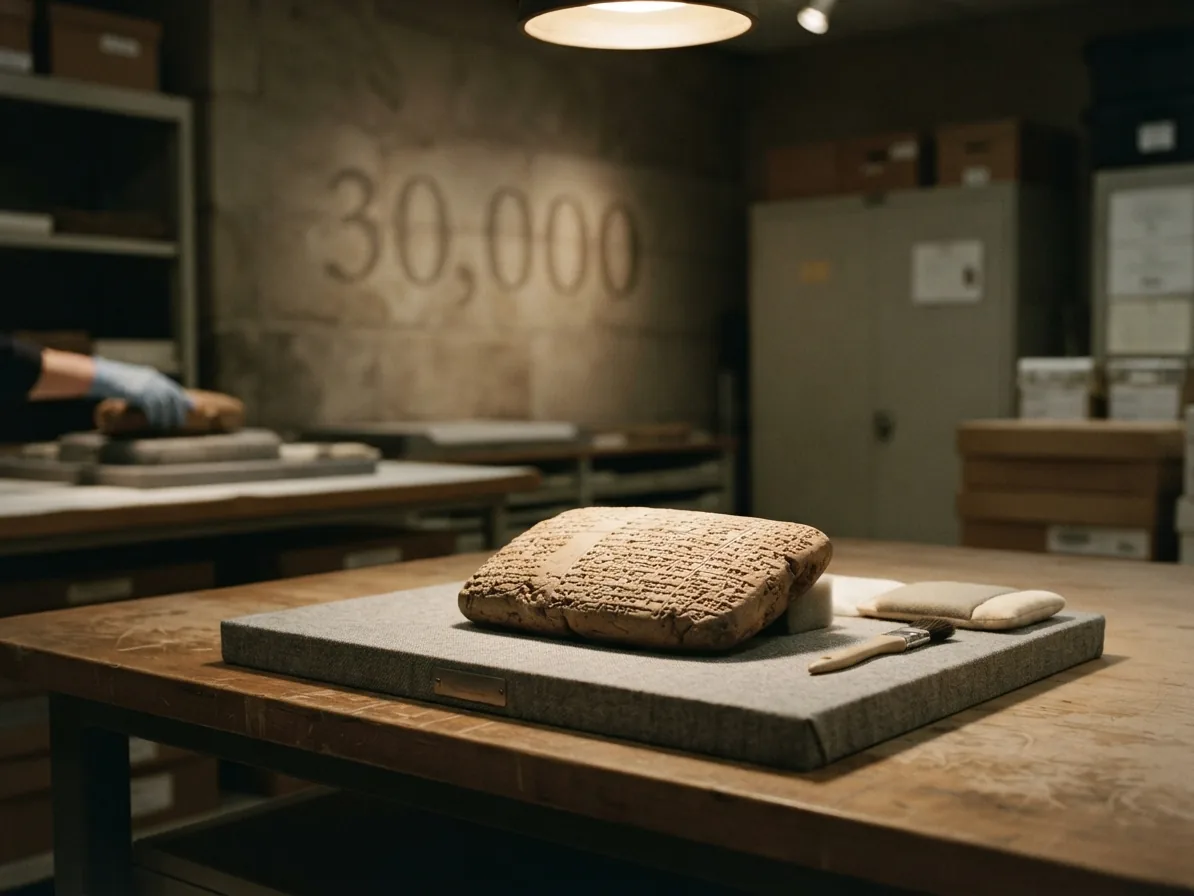
Archaeologists successfully rescued 30,000 historical artifacts from the Deir ez-Zor Museum in Syria during 2014 and 2015.
-
A recent study in Museum Management and Curatorship details the operation, which was led by Professor Maamoun Abdulkarim.
-
Throughout Abdulkarim's tenure ending in 2017, authorities managed to relocate and secure approximately 300,000 museum items across the country.
Heroic efforts in a conflict zone
A recent study highlights the extraordinary bravery of a team of archaeologists who successfully secured thousands of historical artifacts from the Deir ez-Zor Museum in Syria. As the city faced the advancing forces of the Islamic State in 2014 and 2015, experts moved swiftly to protect the region’s rich cultural heritage from imminent destruction.
Professor Maamoun Abdulkarim, who led Syria’s Directorate-General of Antiquities and Museums at the time, detailed the rescue operation in the journal Museum Management and Curatorship. He explained that navigating an active war zone requires far more than mapping out a physical route.
“It fundamentally involves decision-making, institutional resilience, trust, and the ability to adapt rapidly to changing circumstances,” stated Professor Abdulkarim.
Protecting human history
Before the civil war began in 2011, Syria maintained 35 archaeological museums. The Deir ez-Zor Museum held some of the country’s most significant collections from ancient Mesopotamian sites, including Mari, Halaf, and Dura-Europos. During a period of widespread looting and the destruction of cultural sites across the Middle East, swift action became paramount.
“This period formed a critical juncture, as it coincided with the fall of Mosul in Iraq, the looting of that museum, and the destruction of antiquities from Nineveh and Assyria,” Abdulkarim noted.
Recognizing the devastating losses in neighboring regions, the team understood the urgent need to intervene.
“These occurrences compelled Syrian antiquities authorities to promptly reevaluate protection policies and expedite emergency measures in cities that were at risk of siege or collapse,” he explained.
The mission was fraught with danger, relying on a narrow and vulnerable corridor connecting the museum to a military airport. Despite the severe personal risks, the leadership prioritized the safety of the region’s ancient treasures.
“My foremost priority was the protection of cultural heritage, and I was prepared to bear whatever personal and professional risks and consequences those decisions might entail,” said Abdulkarim.
A monumental preservation achievement
By the end of Abdulkarim’s tenure in 2017, approximately 300,000 museum items had been relocated to safe sites across the country.
“The artifacts accounted for the overwhelming majority of the country’s museum collections—including approximately 30,000 objects from the Deir ez-Zor Museum,” he reported.
The preservation of these specific items represents a massive victory for global heritage.
“The 30,000 objects rescued from Deir ez-Zor represent more than just museum pieces; they hold thousands of years of human history and are part of the identity and memory of the communities in the Euphrates region,” Abdulkarim emphasized.
For the experts involved, the mission was fundamentally about defending the identity of ancient civilizations.
“We did not rescue 30,000 objects simply to save 30,000 museum pieces. We were protecting thousands of years of memory that war threatened to erase,” he added.
The value of trust and timing
The successful extraction of these historic items illustrates how vital human connection and decisive leadership are during crises.
“The most valuable resource during a crisis is not always money or technology. Sometimes it is trust, the trust between colleagues who can make the right decision when there is no time left for normal procedures,” Abdulkarim reflected.
Ultimately, the choice to move quickly under dangerous and unpredictable conditions saved an invaluable portion of global history.
“In a cultural emergency, waiting for perfect conditions can become more dangerous than acting under uncertainty,” he warned.